

Built to Stick
Thomas Boivin, Brian Hastings, and Matt Hunt break down 11 tournament blueprints over the course of more than 160 short video lessons. They make sure that you retain what they're teaching with quizzes, trainer sessions, and additional resources created specifically for each blueprint.
I ran deep in almost every live event since starting the course, including a final table in an 800-runner main.askpete · Beyond the Solver student

Baseline, Leak, Counter
Population mistakes become your edge
Establish the Baseline
Start from the solver's output and learn what play at equilibrium looks like.
Spot the Leak
Pinpoint exactly where the mid-stakes field deviates from that baseline, street by street.
Lock in the Counter
We node lock their play to show you what their strategies look like in practice, and how the solver would exploit those mistakes.
Exploit Your Opponents
You get the precise adjustments that allow you to exploit their mistakes. Then drill these spots with quizzes and Trainer reps until it's automatic.
From Solver Baseline to In-Game Adjustments
Watch
Learn one decision, heuristic, or recurring population leak at a time.
Test
Use scored quizzes to confirm that you understand the underlying logic.
Drill
Make sure the knowledge sticks by practicing these exact spots with the Octopi Trainer.
Apply
Review the key takeaways until the adjustment becomes automatic at the table.
11 Blueprints for the Tournament Spots That Matter Most
A blueprint is a complete game plan for a specific element of tournament poker. That could be a preflop adjustment, a bet sizing choice, or an ICM consideration. Together, these eleven cover the highest-leverage spots you actually face, so learning them builds a real edge where it matters most. Each one starts from the solver baseline, shows you exactly where the field deviates, and hands you the counter you can take straight to the table. You'll learn to transform theory into exploits that generate real results at the table.
- All 11 blueprints
- 160+ short video lessons
- Quizzes on the material
- Trainer drills
- Lifetime access to the videos
- One month Octopi Professional access
Everything Included
With Your Purchase
You get access to all 11 blueprints (160+ lessons), as well as all the quizzes, trainer drills, and additional resources that ensure you retain the concepts that are taught.
Your purchase also includes one month of Octopi's Professional plan, so you can run every drill while you work through the course or explore other Octopi features like the Vault.
Learn From Their Experience
Thomas designed the program and teaches the majority of the blueprints, while Brian Hastings and Matt Hunt teach concepts where they have the most expertise, from bracelet-level tournament experience to solver-driven theory and study.

Thomas Boivin
Designed every topic and exploitation framework in this program. He is still at the very top of the game himself, winning more than $8.42M in live tournaments in 2025 alone.
- ~$17M live earnings
- 8 WSOP final tables, $2.29M at WSOP Paradise
- 5 years coaching amateurs to high-stakes players
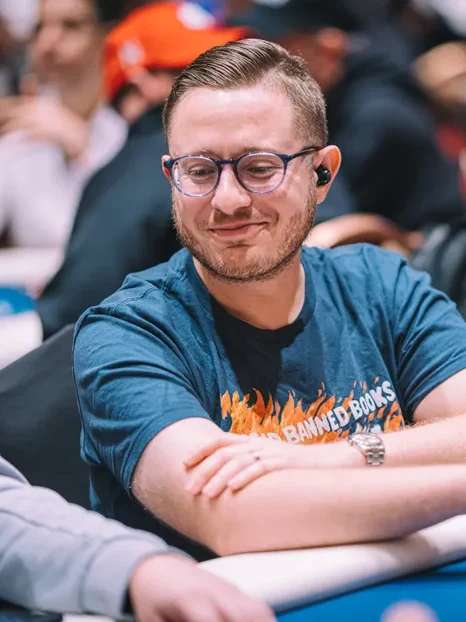
Brian Hastings
6× WSOP Bracelet WinnerTeaches lessons on topics where his experience runs deepest, drawing on a career at the highest stakes.
- 6 WSOP bracelets across multiple formats
- High stakes player (NLH, PLO, mixed games)
- One of the biggest online cash-game winners of his era
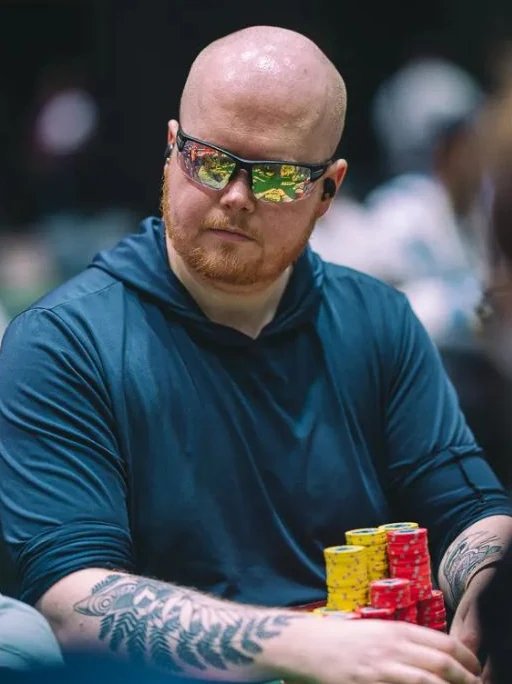
Matt Hunt
Theory & Solver SpecialistOne of the sharpest theory minds in poker coaching. He turns dense solver outputs into clear, repeatable game plans that students can actually apply at the table.
- Deep command of solver-based theory and study
- 5,000+ hours of 1-on-1 coaching since 2013
- Students: $5M+ in live earnings since 2023
What Changed at the Table
Feedback from players who have already worked through the program
The best course I've taken, and I've bought RYE, Upswing, and RIO. It finally broke the spell of being a losing player.
It opened my eyes to node-locking and gave me a real thought process for evaluating hands.
Thomas' sections were eye-opening, and when he got into the exploits it felt like the light bulb went right on in my head.
Very advanced material you won't find in generic or public content. It's already changing how I think about the game.
Thomas' sections are excellent and clearly explained, with the right pauses and recaps. The variety in his voice makes it easy to listen to.
Thomas brings fire to his lessons, and Brian and Matt keep it grounded. Matt's multiway videos have me more excited than ever to play those pots.
Short, immediately implementable lessons, and it always teaches the why behind an action.
The big flop bets have been very effective in my games, and my confidence is way up.
There's a lot of value here. Even implementing a few concepts consistently has been very +EV for me.
Instant Access to the Full Program
Beyond the Solver
11 Blueprints to Exploit Common Population Mistakes
One payment, every blueprint and lesson, yours to keep
- All 11 blueprints
- 160+ short video lessons
- Octopi Trainer drills
- Lifetime access to course videos
- One month of Octopi's Professional plan
One-time payment · Start immediately · Existing Pro members receive account credit
Lifetime access to all course videos. Trainer drills and wider platform access require an active Pro membership after your free month.
Everything Worth Knowing Before You Enroll
I already use solvers. How is this different from working through spots on my own?
The course is built on two pillars: structure and exploits. Every lesson is organized with bullet points, takeaways, and the heuristics we think are most valuable to teach right now, with no aimless solver browsing for 45 minutes. Then roughly half of each session is dedicated to exploits. We took real data on how the population actually plays and ran custom sims to show you exactly how to exploit them. It's a series of blueprints you can apply in your next series right away.
What skill level do I need to get value from this?
This isn't for complete beginners who've never opened a solver. If you've watched a course before, have a subscription to any study platform, or have browsed a few sims, you already understand how solvers work and you're ready. Whether you're a low-stakes player, a mid-stakes regular, or a grinder who studies every day, there's something to take from every blueprint.
Will this apply to my stakes?
As long as you're not playing $25k+ buyins live or the highest stakes online, we're confident that you'll learn a lot from this course. The exploits and heuristics target weaker, non-elite populations, which are the kind of fields you'll find in the vast majority of live and online games.
How much of the course is GTO vs. exploitative play?
Roughly 50-50. The first half of each blueprint covers the baseline and the GTO heuristics at a semi-advanced level. Once we've fixed those leaks, the second half shifts to exploits: taking the data on how the population plays and showing you exactly how to adapt your strategy against them.
How much time will it take?
Each of the 11 blueprints is roughly 90 minutes of content, divided into short, focused video lessons — 160+ across the course — plus quizzes and drills. You can get through the course as quickly, or as slowly, as you feel like going through it, depending on the time you have available.
Can I go at my own pace?
Yes, you can go fully at your own pace, there's no set schedule to keep up with. The course is designed to be completed in about a month, which is why we include one month of Octopi's Professional plan with your purchase. The video lessons stay yours to revisit anytime; the drills and broader platform access require an active Octopi Professional membership.
How do I retain and apply what I learn?
The course is built for active learning. Each lesson links directly to Octopi Trainer drills, and after each video there's a quiz that reinforces the key takeaways.
Do I need an Octopi subscription to participate?
Your purchase includes one month of Octopi Pro membership, which gives you access to the drills and the rest of the platform. After that month ends, drills require an active membership, but all video content stays yours forever.
What if I already have an Octopi subscription?
Your existing subscription gets credited. You won't pay twice for the same period.
How much of the course does Thomas personally teach?
Thomas designed the entire curriculum and teaches the majority of sessions. Brian Hastings and Matt Hunt contribute lessons on specific topics in their areas of deepest expertise. You can see the breakdown of which coaches teach which sections in the curriculum section above.
When can I start?
As soon as you enroll. The course is self-paced, so you can start right away and move through the sessions on your own schedule. Your video lessons stay available to revisit anytime.